A House With Many Rooms
What does this dream mean?
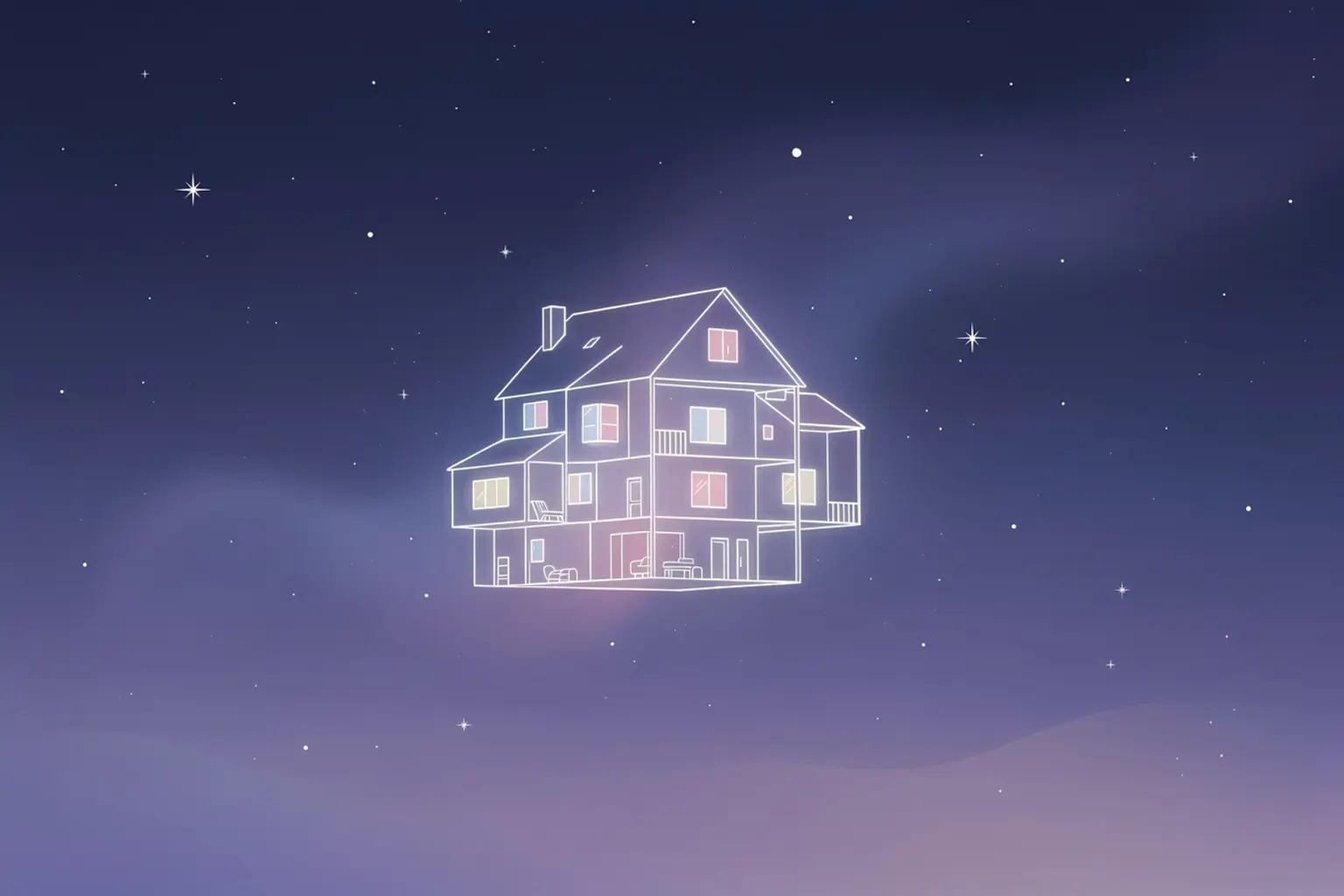
Carl Jung built his model of the psyche partly on one such dream: descending through a house whose upper floors were modern, whose ground floor was medieval, whose cellar ran back to Roman times. A house with many rooms performs the same correction in breadth rather than depth. It tells you that the self is a far larger property than the corner you inhabit — with wings you have never entered, capacities you file under 'not me', and histories stored well behind the rooms you show guests. The dream usually arrives when a life question has outgrown your current square footage: a career at a crossroads, an identity stretched by change, a period that demands more of you than the old floor plan allows.
The rooms themselves carry the reading. Bright, furnished rooms you did not know existed are undiscovered resources — abilities and interests you have been living below; the dream is an inventory notice. Locked or hidden doors are more pointed: something in you has been deliberately closed off, often a talent abandoned as impractical or a desire ruled unacceptable, and the dream marks the wall it sits behind. A room you enter and immediately leave, or refuse to open at all, deserves a second look — avoidance has an address here. And if the endless rooms feel exhausting rather than promising, the dream may be describing overextension: a life spread across too many roles, where every door opens onto another obligation and none onto rest.
One folk thread reads the vast house as approaching fortune — the more rooms, the greater the prospect — and the practical reading is not far from that. Treat the dream as a survey of your own extent. Pick one door, ideally the one that makes you most uneasy, and open it in waking life: the course not taken, the conversation about a different role, the interest you shelved. You do not have to furnish every room. You only have to stop pretending the house is smaller than it is.